Luxury Footwear Market Size to Reach $62.54 Billion by 2031 as Demand for Athletic Luxury & Sustainable Craftsmanship Gains Momentum – Mordor Intelligence
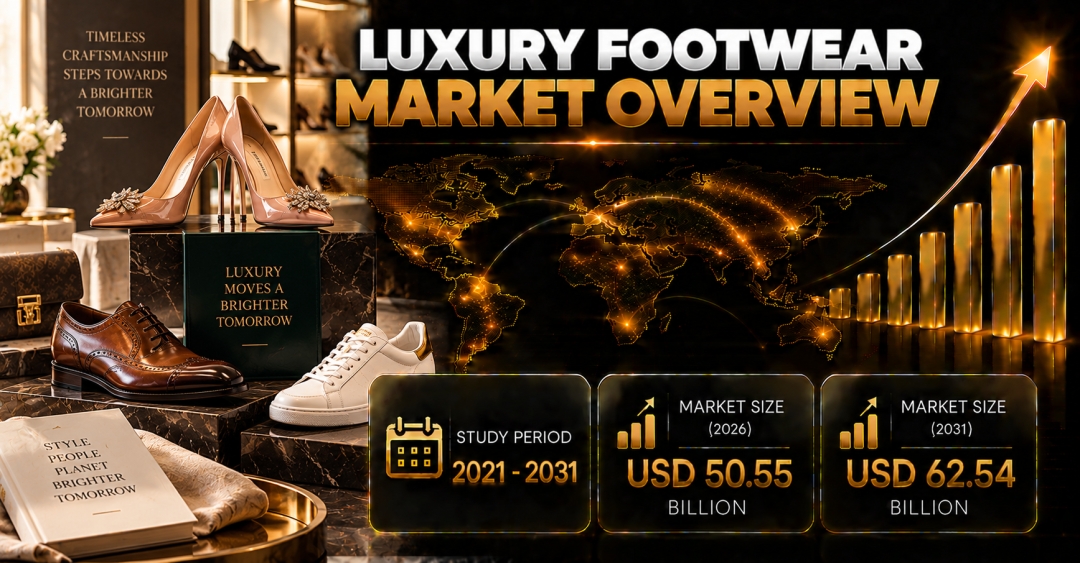
Hyderabad, September 28, 2026: According to Mordor Intelligence, the luxury footwear market size is expected to grow from $50.55 billion in 2026 to reach $62.54 billion by 2031, registering a CAGR of 4.35% during the forecast period (2026-2031). The market continues to expand as affluent consumers prioritize premium footwear that combines ergonomic daily comfort with distinct social status and artisanal distinction. Growing disposable wealth across emerging markets, consistent corporate wardrobe replacement cycles, and the rising popularity of high-end casualization continue to support demand across mono-brand boutiques, luxury department stores, and digital commerce channels worldwide.
The luxury footwear market growth is also influenced by changing supply chain dynamics and evolving consumer expectations regarding environmental sustainability and material provenance. Luxury fashion houses are investing in localized leather tanneries, automated Italian manufacturing hubs, and bio-based leather alternatives. These operational developments are helping businesses respond to tariff fluctuations and rising logistics costs while maintaining structural finishing, hand-stitched detailing, and brand prestige. Together, these factors continue to strengthen the integrated luxury footwear market forecast across established and developing fashion capitals.
Luxury Footwear Market Trends
Athletic Luxury and Streetwear Collaborations Outpace Formal Silhouettes
One of the leading luxury footwear market trends is the high growth of athletic luxury styles over traditional formal footwear. While non-athletic silhouettes like oxfords, pumps, and leather loafers hold the majority of baseline revenue within the luxury footwear market share, high-fashion sneakers are demonstrating the fastest gains. Luxury fashion houses are embedding carbon-fiber plates, performance midsoles, and archival designs into runway sneakers. Furthermore, limited-edition collaborations between luxury maisons and iconic sports brands utilize digital queue systems and controlled drops to create exclusivity. This continuous blend of streetwear and high fashion continues to support the luxury footwear industry.
Sustainable Tanning and Circular Materials Drive Product Differentiation
Material selection continues to play an increasingly important role in luxury footwear market growth. High-net-worth buyers actively seek footwear crafted from vegetable-tanned hides, certified regenerative leather, and recycled ocean polymers that minimize environmental degradation. Prestigious footwear ateliers are introducing circular resoling programs and bio-fabricated materials, aligning with broader manufacturing standards seen across the integrated personal luxury goods industry for environmental stewardship. These sustainability commitments help luxury brands satisfy eco-conscious consumers without compromising suppleness or longevity.
Omnichannel Flagships and Virtual Fitting Tools Expand High-End Retail Reach
Another important luxury footwear market trend is the balanced coexistence of physical flagship boutiques and direct-to-consumer digital channels. While experiential brick-and-mortar stores in major luxury corridors allow clients to inspect leather textures and receive personalized styling, online luxury platforms provide global access to seasonal runway drops. Brand owners are integrating augmented-reality try-on algorithms and clienteling mobile applications to personalize remote shopping. Strategic omnichannel distribution alignments are becoming an essential area of competition across the luxury footwear industry.
Kids’ Luxury Footwear and Gift Purchases Emerge as Rapid-Growth Segments
Demographic segmentation indicates notable diversification across customer categories. While female footwear drives significant value through seasonal trend cycles and eveningwear purchases, children’s luxury footwear represents the quickest-growing demographic tier. Affluent parents and family gift-givers increasingly purchase miniature editions of iconic adult designer sneakers and dress shoes for celebratory occasions. Social media sharing and family styling trends further encourage this expenditure, prompting luxury brands to launch dedicated children’s footwear lines.
North America Retains Revenue Leadership While Asia-Pacific Leads Regional Growth
Regional consumption patterns continue to influence the luxury footwear market forecast. North America commands the largest regional market share, supported by robust household purchasing power, established luxury retail networks, and recurring corporate replacement demand. Meanwhile, the Asia-Pacific region represents the fastest-growing market, propelled by expanding high-net-worth demographics, rapid urbanization, and strong brand engagement across China, Japan, and Southeast Asian commercial centers. Evolving consumer lifestyle aspirations continue to create new opportunities for luxury houses expanding their regional presence.
Check out more details and stay updated with the latest industry trends, including the Japanese version for localized insights: https://www.mordorintelligence.com/ja/industry-reports/luxury-footwear-market?utm_source=abnewswire
Luxury Footwear Market Segmentation
By Category
- Athletic Footwear
- Non-Athletic Footwear
By End-User
- Men
- Women
- Children
By Product Type
- Shoes and Boots
- Heels and Pumps
- Sneakers
- Sandals
- Others
By Distribution Channel
- Specialty Stores
- Online Retail Stores
- Department Stores
- Others
By Geography
- North America
- Europe
- Asia-Pacific
- South America
- Middle East and Africa
Competitive Landscape of the Luxury Footwear Industry
The luxury footwear industry exhibits a moderate level of market concentration, with multinational luxury conglomerates, historic heritage cordwainers, and modern designer labels competing across artisanal heritage, retail real estate, and celebrity brand endorsements. Industry conglomerates leverage shared logistics networks, extensive leather-sourcing contracts, and multi-brand retail relationships to maintain strong commercial margins across global sales regions.
Artisanal craftsmanship and design exclusivity continue to be critical areas of differentiation as heritage houses invest in master cordwainer apprenticeships and patented ergonomic lasts to enhance walking comfort. Businesses are also refining distribution partnerships with premier multi-brand department stores and curated luxury digital platforms to ensure prime shelf visibility. These initiatives are helping companies protect their luxury footwear market share while maintaining quality consistency across international distribution networks.
Regional expansion also remains an important business strategy. Leading luxury brands continue to build experiential flagship stores in tier-one Asian cities, expand localized clienteling services, and establish dedicated duty-free travel retail presences to capture growing demand across both mature and high-growth markets. As global commercial demand for collectible, high-craftsmanship shoes continues to rise, the luxury footwear market forecast remains supported by ongoing investments in vertical manufacturing integration, sustainable material research, and international brand development.
Key Players
Major companies operating in the luxury footwear market include:
- LVMH Moët Hennessy Louis Vuitton SE
- Kering SA
- Compagnie Financière Richemont SA
- Prada SpA
- Capri Holdings Ltd
Conclusion
The luxury footwear market forecast remains positive as global consumers continue choosing premium, meticulously crafted shoes that deliver lasting aesthetic elegance and functional comfort. Footwear maisons and designer brands are responding by expanding athletic luxury collections, improving leather tanning sustainability, and developing archival reimaginings that balance historic heritage with contemporary street culture. These developments are expected to support continued demand across multiple luxury boutiques and high-end digital channels.
Strategic vertical integration and supply security are becoming increasingly vital as luxury houses adapt to international tariff policies and changing consumer expectations regarding supply chain transparency. At the same time, specialized size-inclusive offerings and customized digital clienteling tools are helping companies enhance overall client engagement while supporting long-term commercial goals. These structural developments continue to guide modern luxury footwear market trends.
Regional opportunities also remain strong. North America provides a reliable, high-value commercial baseline, while Asia-Pacific offers attractive growth pathways as rising wealth creation and fashion appreciation accelerate luxury spending across premier urban hubs. This shift is expected to create new commercial avenues for footwear brands expanding their operational footprint in developing markets.
Overall, the luxury footwear market size is expected to benefit from changing fashion preferences, growing demand for versatile athletic luxury, wider availability across digital and brick-and-mortar flagship networks, and an ongoing commitment to traditional European craftsmanship. Together, these factors are expected to support sustained luxury footwear market growth while strengthening the long-term outlook for the global luxury footwear industry.
Industry-Related Reports
Luxury Handbag Market: The global luxury handbag market is projected to expand from USD 28.57 billion in 2026 to USD 38.13 billion by 2031, growing at a 5.94% CAGR from its 2025 base of USD 27.08 billion. Market momentum is driven by rising affluent disposable incomes across emerging economies and digital channel expansion complementing flagship boutique networks. To counter secondary market counterfeiting and raw leather volatility, luxury design houses are prioritizing circular material innovations, verifiable supply chain provenance, and exclusive capsule collections that maintain high secondary-market residual values.
Luxury Apparel Market Size: The global luxury apparel market size is expected to grow from USD 144.77 billion in 2026 to USD 179.71 billion by 2031, registering a 4.42% CAGR from USD 138.64 billion in 2025. Growth is anchored by international travel retail resurgence, couture-streetwear cross-collaborations, and consumer willingness to pay substantial premiums for artisanal heritage and traceable low-volume manufacturing. Major luxury fashion houses are integrating blockchain-backed Digital Product Passports (DPPs) and NFC authentication to meet stringent ESG traceability regulations, curb gray-market diversion, and elevate post-purchase clienteling.
Luxury Watch Market Share: The global luxury watch market was valued at USD 79.87 billion in 2025 and is estimated to increase from USD 84.77 billion in 2026 to USD 114.19 billion by 2031, advancing at a 6.14% CAGR. Demand is accelerated by younger affluent demographics viewing mechanical horology as collectible alternative assets, alongside horological material innovations like recycled titanium and forged carbon. While physical brand salons command core revenue, verified digital channels and certified pre-owned (CPO) programs are capturing high-margin incremental growth by institutionalizing secondary market liquidity and authentication.
About Mordor Intelligence:
Mordor Intelligence is a trusted partner for businesses seeking comprehensive and actionable market intelligence. Our global reach, expert team, and tailored solutions empower organizations and individuals to make informed decisions, navigate complex markets, and achieve their strategic goals. With a team of over 550 domain experts and on-the-ground specialists spanning 150+ countries, Mordor Intelligence possesses a unique understanding of the global business landscape. This expertise translates into comprehensive syndicated and custom research reports covering a wide spectrum of industries, including aerospace & defense, agriculture, animal nutrition and wellness, automation, automotive, chemicals & materials, consumer goods & services, electronics, energy & power, financial services, food & beverages, healthcare, hospitality & tourism, information & communications technology, investment opportunities, and logistics.
Media Contact
Company Name: Mordor Intelligence
Contact Person: Jignesh Thakkar
Email: Send Email
Phone: +1 617-765-2493
Address:11th Floor, Rajapushpa Summit, Nanakramguda Rd, Financial District, Gachibowli [email protected]
City: Hyderabad
State: Telangana 500008
Country: India
Website: https://www.mordorintelligence.com/industry-reports/luxury-footwear-market?utm_source=abnewswire


